With over 15,000 keepers across England currently signed up with the Livestock Information Service (LIS) to digitally report sheep, goat and deer movements, we spoke to several sheep keepers currently using the service to find out why they choose to do their online reporting with LIS. Commenting on various elements of the service, including the sign-up process, as well as their favourite features and benefits associated with the system, you can hear first-hand from the following sheep keepers and LIS users:
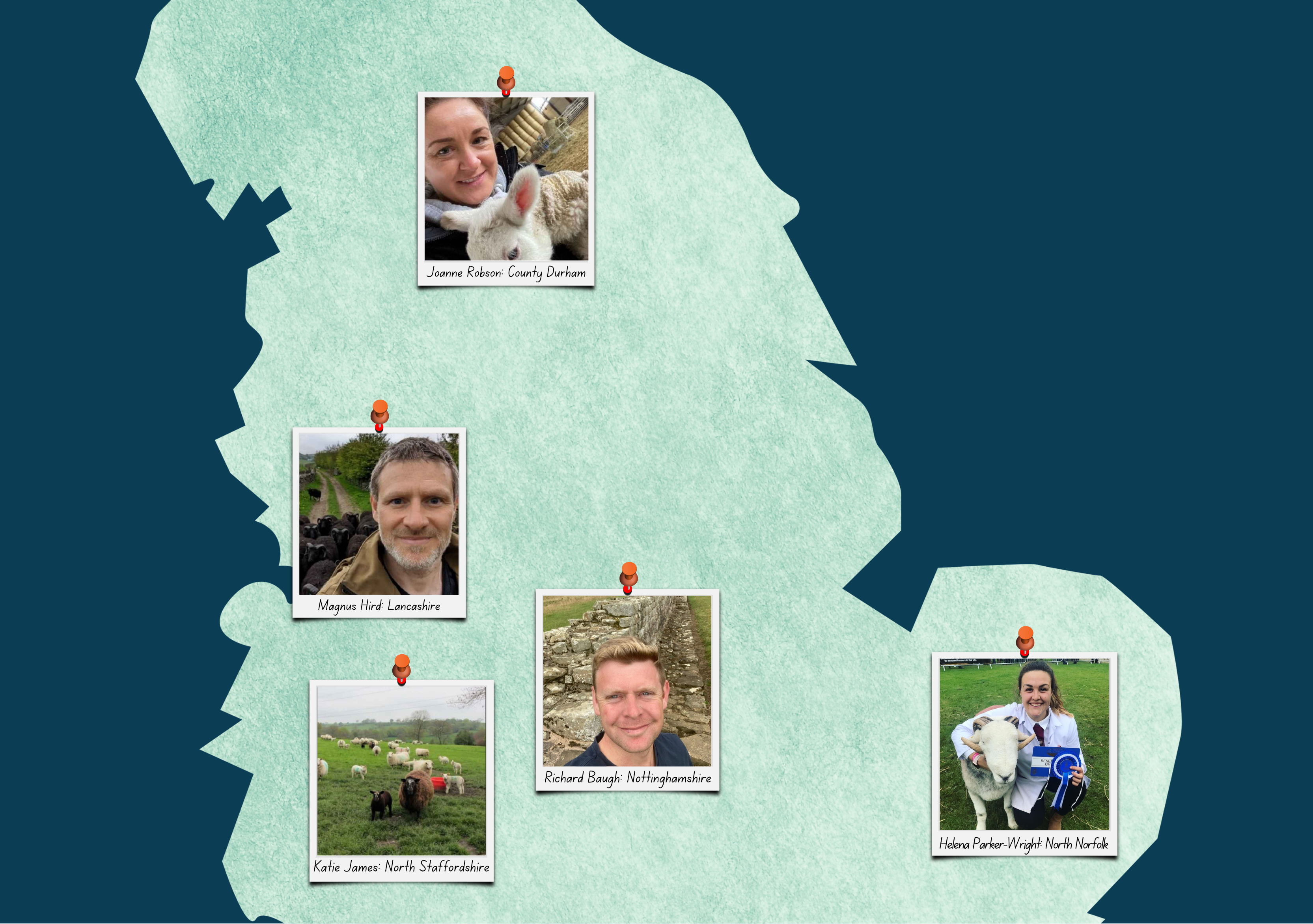
Magnus Hird: Running a small 45-acre farm, situated in Lancashire, is where Magnus and his wife, Helen, are based. They have a flock of 43 Hebridean sheep, as well as 10 Anglo-Nubian goats and a small herd of Dexter cattle.
Katie James: Farm worker and administrator, Katie is based on a farm in North Staffordshire, farming 300 head of beef cattle and 100 head of sheep.
Joanne Robson: In County Durham, on High West House Farm, is where you will find Joanne working on her parents’ farm part-time, as well as helping with farm paperwork whenever she can. The farm has approximately 500 breeding sheep plus lambs.
Helena Parker-Wright: Situated in North Norfolk is where you will find Helena Parker-Wright and her flock of purebred Herdwick Sheep. With a head count of 85 sheep across 15 acres, the flock consists of approximately 30 breeding ewes, including homebred replacement ewes.
Richard Baugh: Third-generation farmer based in Nottinghamshire, Richard farms 300 acres and has 700 breeding ewes, finishing lambs for a contract with a supermarket, as well as rearing his own replacements. In addition to his flock, Richard also has 120 sows.
The sign-up process
Signing up to LIS is free and all you need is a current County Parish Holding (CPH) number and the associated, registered email address. Reflecting on their experiences of setting up a LIS account, our users commented on the ease and simplicity of signing up to the service. “Setting up the account was easy, and once you find your way around the site, it is much more user-friendly than it’s predecessor [ARAMS]”, commented Katie. In addition, Magnus said, “From what I recall it was straightforward to set up” and that using the service was “just a matter of trying out the menu items, getting used to where the different bits are”. You can find out more about signing up to LIS, as well as useful resources and helpful how-to videos, on our Get Started page.
How keepers use LIS
LIS can be used by sheep keepers to make movement reporting even easier and is a useful tool for farmers with various set ups and flock sizes. Richard explains that as they rent additional land on a short-term basis for his flock, he is frequently moving sheep, “we use LIS a lot, I would say weekly”. Similarly, Katie reports the movement of around 80 sheep a month on or off the farm and uses the service “three times a week, every week”. Magnus and Helena, both with smaller farm and flock sizes, make fewer movements, yet still find LIS of use to them, with Helena commenting that “There’s probably features on there [LIS] I don’t use yet, but how I use the service works for me”.
Why keepers use LIS
Timely and accurate movement records on LIS maintains compliant records, with the free, electronic holding register making record keeping much easier. Helena explains that the feature she likes most about LIS “is being able to check my headcount easily to ensure everything is as it should be”. Magnus also finds the electronic holding register a useful feature, commenting that “being able to now upload a file of all animals on your farm so that LIS holds a full list, visible together, is a huge advantage”.
In addition to the electronic holding register, LIS users also report benefiting from the increased speed of reporting online compared to paper movement forms, and the fact that these online records are securely stored, negating the need for files of paperwork. Helena commented that “reducing the need for paper records is the way forward” as “you haven’t got to worry about sending your paperwork in and doing so within a certain amount of time. You go online, record the movement and it’s done. There’s no risk of losing records or forgetting about paperwork.” Richard shares the sentiment, explaining “I haven’t posted paper movement forms in years, and to be honest, I am not sure why other farmers still do. Especially when using LIS to record sheep movements is so easy and our records are securely stored online.”
Another reason sheep keepers like LIS, alongside the ease of using the service, is the availability of the LIS Support Team. The team are on hand to answer any queries or help with any issues that users of the service may face. Helena recently experienced an issue with a market movement and decided to contact the LIS Support Team for assistance. “I recently had an issue where I was four ewes short on the system due to an error with the market movement. The Support Team were great and sorted it all out for me within 24 to 48 hours.”
Looking ahead
The Livestock Information Service is a UK government-funded statutory service, and will evolve to replace existing, species-specific traceability systems across England to form a new multispecies traceability system. LIS for sheep, goat and deer was launched in 2022, replacing ARAMS, and next to launch will be LIS for cattle, replacing the Cattle Tracing System (CTS) for England.
When considering the evolution of LIS to form a multispecies platform, Marcus commented that he is “looking forward to when the cattle are on the service in due course so our cattle movements are in the same place too”. Similarly, Joanne explains that “along with sheep, we also have approximately 140 breeding cows plus followers and about 400 acres of arable crops. I’ve used the CTS online system for many years to keep track of cattle movements, so look forward to all livestock management within the same LIS system”. Keepers with sheep only, such as Helena, commented “There have been many improvements to the system and I am sure there will be even more functionality to come. I would recommend LIS to anyone”.
You can read full testimonials from our users on our website. Alternatively, if you wish to find out more about LIS for sheep, goat and deer, click here.